


Introduction
Frosted sugar cookie bars are a delightful twist on the classic sugar cookie that combines easy preparation with rich flavors. These bars deliver the same sweet bliss as traditional cookies, but they cut down on labor and time, making them perfect for busy home cooks looking for a treat.
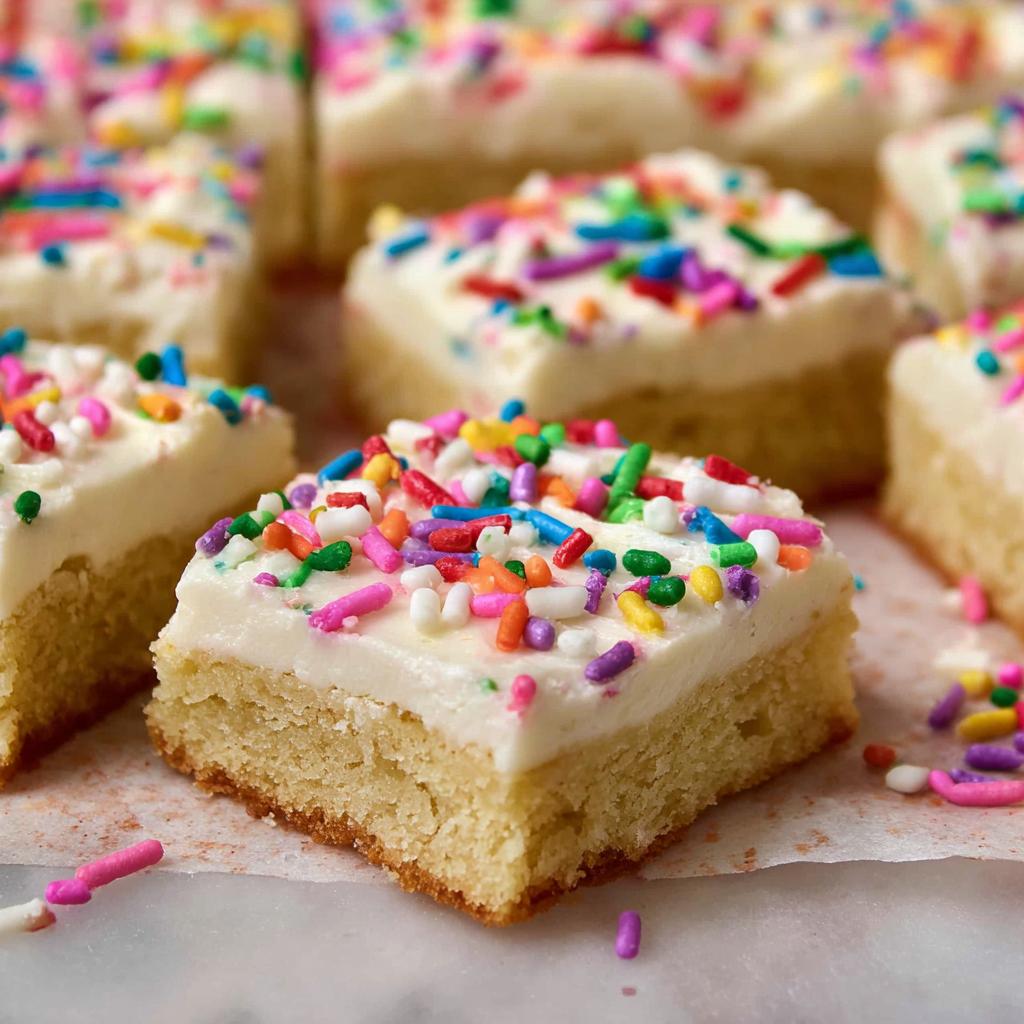
These bars are soft, chewy, and coated with a luscious frosting, making them an instant favorite for gatherings, parties, or simply a sweet afternoon snack. The combination of sugar and butter creates a comforting flavor profile that can be tailored with various frostings to suit any taste.
Ingredients
- 2 ½ cups all-purpose flour
Flour is the foundation of the cookie bars, providing structure and stability. The type of flour used can affect the texture, with all-purpose flour being ideal for a tender, chewy cookie. - 1 teaspoon baking soda
Baking soda acts as a leavening agent, helping the cookie bars rise and achieve a fluffy texture. It also contributes to a slight crispness on the edges while keeping the centers soft. - ½ teaspoon salt
Salt amplifies the flavors of the baked goods, ensuring the sweetness is balanced. It also helps to enhance the overall flavor profile of the cookie bars. - 1 cup unsalted butter, softened
Butter adds richness and flavor to the cookie base. Using unsalted butter allows for better control over the salt content, resulting in a balanced taste. - 1 ½ cups granulated sugar
Sugar not only sweetens the cookies but also contributes to their texture. It helps to retain moisture, leading to chewy, soft bars. - 2 large eggs
Eggs bind the ingredients together, providing moisture and contributing to the structure of the bars. They also add richness to the flavor. - 2 teaspoons vanilla extract
Vanilla extract enhances the sweetness and adds depth to the overall flavor. It’s an essential ingredient in most cookie recipes, providing that comforting aromatic quality. - 2 cups powdered sugar
Powdered sugar is used to create a smooth, creamy frosting. It dissolves easily, allowing for a velvety texture that's perfect for spreading. - 1/4 cup milk
Milk helps to achieve the right consistency for the frosting, making it easy to spread while also adding a touch of creaminess. - 1 teaspoon vanilla extract for frosting
This adds flavor to the frosting, ensuring it complements the sweetness of the cookie bars and enhances their overall deliciousness.
Directions & Preparation
Step 1: Preheat the oven to 350°F (175°C) and prepare a baking pan.
Preheating ensures an even baking temperature, which is crucial for achieving a consistent texture. Greasing the pan or lining it with parchment paper prevents sticking, allowing for easy release after baking.
Step 2: In a bowl, whisk together the flour, baking soda, and salt.
Whisking these dry ingredients together helps to evenly distribute the leavening agent and salt throughout the flour. This step is essential to avoid any concentrated spots of baking soda or salt in the final product.
Step 3: In a separate bowl, beat the softened butter and granulated sugar until creamy.
Creaming the butter and sugar aerates the mixture, incorporating air that helps the bars rise. This step is critical for achieving a light, fluffy texture in the final product.
Step 4: Add the eggs and vanilla extract to the butter mixture, mixing until well combined.
Incorporating eggs and vanilla at this stage enriches the mixture further. This combination binds the ingredients and adds moisture, contributing to the cookies' tender crumb.
Step 5: Gradually add the dry ingredients to the wet mixture, stirring until just combined.
This step needs to be done gently to avoid overmixing, which can lead to tough cookie bars. Overmixing activates gluten, which can make the texture dense instead of soft and chewy.
Step 6: Spread the dough evenly into the prepared baking pan.
Evenly spreading the dough allows for uniform baking, ensuring that all parts of the bars are the same texture and don’t over or under bake. Using a spatula can help smooth the top.
Step 7: Bake in the preheated oven for 20-25 minutes, or until the edges are lightly golden.
Baking time is crucial; starting at 20 minutes will help prevent overbaking. The bars are done when the edges show a slight golden brown, while the center remains soft. Check with a toothpick for doneness.
Step 8: Let the bars cool completely before frosting.
Cooling completely is necessary to prevent the frosting from melting into the still-warm bars. This step also allows the flavors to settle, enhancing the overall taste.
Step 9: In a medium bowl, mix the powdered sugar, milk, and vanilla extract for the frosting.
Mixing the frosting ingredients thoroughly ensures a uniform consistency. Adjusting the milk will help achieve the desired thickness for spreading—too thick, and it won't spread easily; too thin, and it will run.
Step 10: Spread the frosting generously over the cooled cookie bars and slice to serve.
Generously frosting the bars not only adds flavor but also a beautiful finish. Slicing the bars once frosted makes them easy to serve and enjoy—a perfect treat for gatherings.
Choosing the Right Frosting
While the classic vanilla frosting is delightful, feel free to get creative with flavors or colors. Adding cocoa powder for a chocolate twist or using almond extract instead of vanilla can transform these cookie bars. Experimenting with different-colored frostings can elevate your presentation for special occasions.
Textures and Taste: Perfecting the Bars
The texture of your frosted sugar cookie bars should be soft and chewy in the center with a slight crispness at the edges. Ensuring you do not overmix the dough will aid in achieving that light and airy structure. The key is to bake until just done, allowing them to set without becoming dry.
Storing Your Frosted Sugar Cookie Bars
These cookie bars are best enjoyed fresh, but you can store any leftovers in an airtight container. If they endure a few days, placing parchment paper between layers can prevent sticking. They maintain their flavor and texture admirably for up to a week if kept in a cool place.
FAQs
Can I use other types of flour for this recipe?
While all-purpose flour is recommended, you can experiment with cake flour for a softer texture, but other flour types may yield different results.
What should I do if my frosting is too thick?
If your frosting is too thick, gradually add more milk, one teaspoon at a time, until you reach your desired consistency.
How can I adjust the sweetness of my cookie bars?
To decrease sweetness, reduce the sugar slightly in the base dough, but keep in mind this may affect the texture.
Why are my cookie bars sticking to the pan?
If your bars are sticking, they may not have cooled completely or the pan wasn’t greased properly. Always ensure complete cooling and use parchment paper for best results.
Can I double the recipe for a larger batch?
Absolutely! If you double the ingredients, consider using a larger baking pan or adjusting the baking time slightly.
What can I do if my bars come out dry?
If the bars are dry, check your baking time. Overbaking can cause dryness; also, ensure you're using the correct measurements.
Conclusion
Frosted sugar cookie bars are a fantastic choice for any occasion. Their simplicity and versatility make them a beloved treat among both kids and adults alike.
With a few adjustments and the right techniques, you can produce a batch that not only meets but exceeds expectations, enchanting your family and friends with every bite. Enjoy baking and sharing this delightful recipe!
Recipe Card
Notes
Additional serving suggestions: pair with a crisp salad, garlic bread, or roasted seasonal vegetables for balance.
For make-ahead, prep components separately and assemble just before heating to preserve texture.
Taste and adjust with acid (lemon/vinegar) and salt right at the end to wake up flavors.