


Introduction
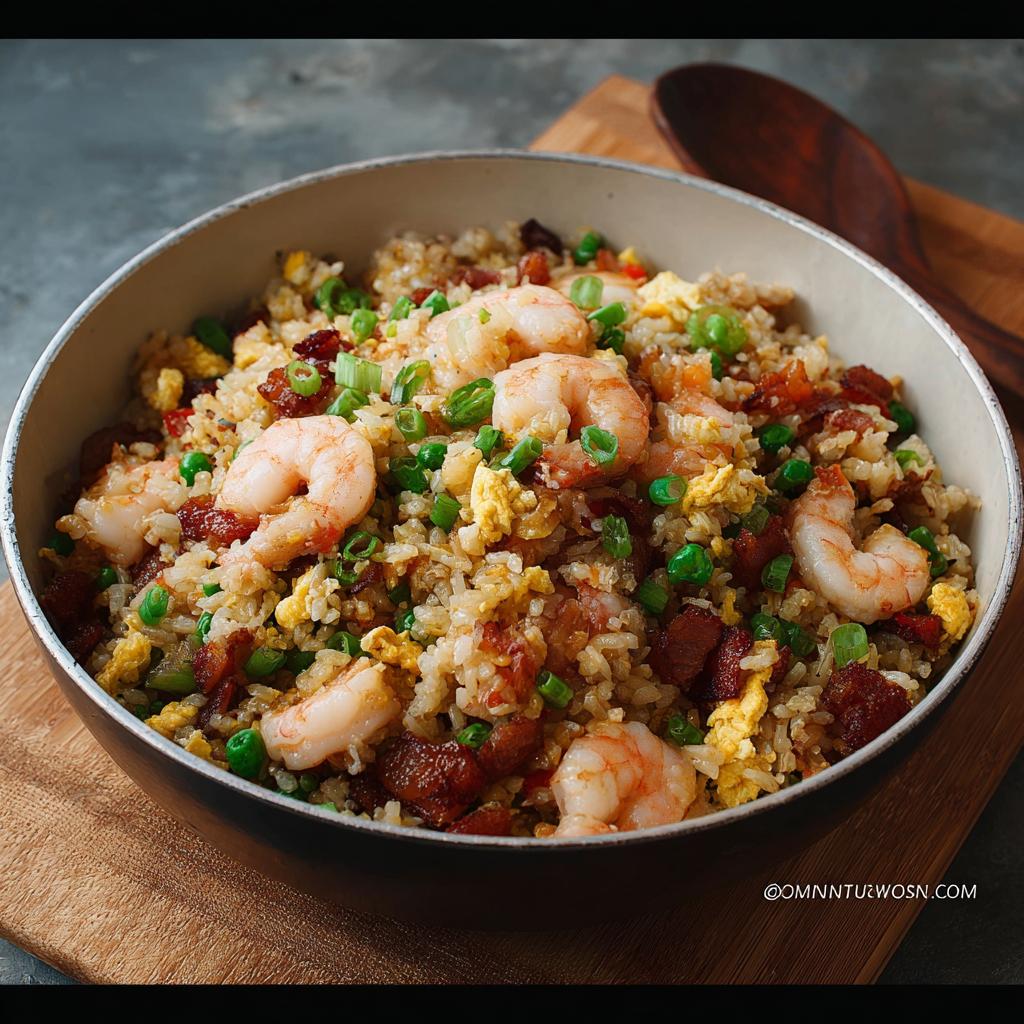
Yang Zhou Fried Rice, a beloved dish originating from Jiangsu province in China, embodies the essence of culinary tradition and cultural fusion. This fragrant and colorful dish is more than just a meal; it’s a celebration of flavors and textures that reflect the spirit of home cooking.
Characterized by its buttery texture and the distinct aroma of seasoned ingredients, this fried rice serves as a canvas for an array of proteins and vegetables, making it both versatile and satisfying. Whether enjoyed on a casual weeknight or as part of a festive feast, Yang Zhou Fried Rice invites you into a world of comforting flavors.
Ingredients
- 3 cups cooked jasmine rice
Day-old jasmine rice is ideal for fried rice, as it is firmer and helps to prevent clumping. Its slightly fragrant nature adds depth to the dish. - 2 tablespoons vegetable oil
Vegetable oil has a high smoke point, making it perfect for frying and ensuring a nice sear on the ingredients without burning. - 3 eggs, beaten
Eggs contribute creaminess and flavor while serving as a source of protein. They should be cooked until just set to enhance the overall texture. - 1 cup cooked shrimp, peeled and deveined
Shrimp adds a touch of sweetness and a lovely seafood flavor that complements the rice, elevating the dish significantly. - 1/2 cup diced cooked ham
Diced ham enhances the dish with its savory notes, providing a smoky contrast to the other ingredients, thus adding complexity. - 1/2 cup green peas
Green peas add a pop of sweetness and vibrant color, which contributes not only to taste but also to the visual appeal of your fried rice. - 1/4 cup carrots, finely diced
Carrots offer crunch and sweetness, balancing the flavors and providing a pleasing bite. Their bright orange hue also enhances the dish’s appearance. - 2 green onions, chopped
Green onions add freshness and a mild onion flavor that ties all the ingredients together, brightening the dish. - 3 tablespoons soy sauce
Soy sauce infuses depth and umami flavor, essential for creating the characteristic savory taste of Yang Zhou Fried Rice. - 1 teaspoon sesame oil
Sesame oil lends a nutty aroma and a glossy finish to the dish, rounding out the overall flavor profile beautifully.
Directions & Preparation
Step 1: Prepare the ingredients before you start cooking.
Having all the ingredients prepped will streamline the cooking process. Fried rice is cooked quickly over high heat, so pre-dicing the vegetables and proteins ensures you won’t be scrambling to chop while everything sizzles in the pan.
Step 2: Heat 1 tablespoon of vegetable oil in a large wok over high heat.
Wok cooking requires high temperatures to achieve the perfect fry. The oil should shimmer and be hot enough to sear the ingredients, ensuring a delightful texture and flavor. This step lays the foundation for a brilliantly cooked dish.
Step 3: Add the beaten eggs and scramble until just set, then remove them from the wok.
Cooking the eggs first keeps their flavor distinct and the texture fluffy. Removing them promptly prevents overcooking and allows them to maintain their soft consistency, which you’ll fold back into the rice later.
Step 4: In the same wok, add the remaining vegetable oil and sauté the diced ham until slightly crispy.
Searing the ham enhances its flavor, releasing natural fats that further enrich the dish. The slight crispiness provides a contrast to the softness of the rice, creating an enjoyable mouthfeel.
Step 5: Stir in the shrimp and cook until pink and opaque.
Shrimp cooks quickly, and when added at this stage, they’ll absorb the flavors of the ham and oil while creating a harmonious blend in the wok. Keep an eye on them to avoid overcooking.
Step 6: Add the carrots and peas, stirring well to combine.
Adding vegetables now allows them to soften slightly while retaining their vibrant color and texture. This balance is crucial for a visually appealing dish that feels fresh.
Step 7: Add the cooked rice to the wok, breaking up any clumps.
Properly adding the rice is essential to achieving the right texture. Unclumping the rice allows it to fry evenly, absorbing the flavors while remaining separate and fluffy.
Step 8: Pour in the soy sauce and sesame oil, tossing everything to combine evenly.
This step is vital as the soy sauce not only seasons the rice but also contributes to its signature color and flavor. Ensure every grain is coated for uniform taste.
Step 9: Fold back in the scrambled eggs and green onions, mixing gently to incorporate.
Incorporating the eggs at this stage adds richness back into the fried rice while allowing the fresh green onion flavor to infuse the dish. It’s the final touch that brings everything together.
Step 10: Serve hot, garnishing with additional green onions if desired.
Serving the dish immediately keeps it warm and maintains the textures. A fresh garnish of green onions adds a vibrant finish and enhances the presentation.
The Choice of Rice Makes a Difference
Using day-old jasmine rice is key to achieving the right texture in Yang Zhou Fried Rice. Freshly cooked rice tends to be too moist and sticky, resulting in clumps rather than the fluffy texture desired in fried rice. By refrigerating the rice overnight, the grains firm up, allowing for a better stir-fry without becoming mushy.
Vegetable Variety Enhances Flavor Profile
While the traditional version of Yang Zhou Fried Rice includes specific vegetables, feel free to integrate seasonal or available options. Each vegetable offers unique sweetness, crunch, and color, not only enhancing the dish visually but also creating depth in flavor. Experimenting with seasonal produce can lead to delightful surprises and custom variations.
Perfecting Your Stir-Frying Technique
Stir-frying at high heat is essential for developing the distinct flavor profile of Yang Zhou Fried Rice. This technique involves quick cooking, allowing ingredients to caramelize slightly while keeping their crispness. Ensuring your wok or pan is adequately heated before adding ingredients prevents steaming and results in a more authentic fried rice experience.
FAQs
What can I use instead of shrimp?
You can substitute the shrimp with chicken, pork, or tofu based on your preference. Just ensure to adjust the cooking time according to the protein used.
Why does my fried rice taste bland?
If the fried rice tastes bland, it could be due to insufficient seasoning. Try adding a bit more soy sauce or seasoning at the end to enhance flavor.
My fried rice turned out mushy; what happened?
Mushy fried rice is often a result of using freshly cooked rice instead of day-old rice. Ensure to use rice that’s been cooled and dried out in the fridge for optimal texture.
Can I use a different type of rice for this recipe?
While jasmine rice is preferred for its aroma and texture, you can use short-grain or long-grain rice. Just keep in mind that the final texture may differ.
What’s the best way to store leftover Yang Zhou Fried Rice?
Store the fried rice in an airtight container in the fridge for up to three days. Reheat thoroughly in a pan over medium heat.
How can I tell when the rice is done frying?
The rice should be hot throughout, slightly crispy, and all ingredients well mixed. A good stir-fry will have a slightly glossy appearance without excess moisture.
What if my fried rice is too oily?
If the dish is too oily, try adding a little more rice or vegetables to balance it out. Alternatively, you can drain off excess oil before serving.
Conclusion
Yang Zhou Fried Rice is not only a dish filled with comforting flavors but also an invitation to explore the versatility of cooking. With every ingredient playing a crucial role, it illustrates how simple components can come together for a complex taste experience.
Whichever variations you choose, this fried rice is a reminder of the joy that comes from creating something special in your kitchen. So gather your ingredients and delight in making your version of this cherished dish!
Recipe Card
Notes
Additional serving suggestions: pair with a crisp salad, garlic bread, or roasted seasonal vegetables for balance.
For make-ahead, prep components separately and assemble just before heating to preserve texture.
Taste and adjust with acid (lemon/vinegar) and salt right at the end to wake up flavors.