

Garlic Butter Steak With Parmesan Cream Sauce
Introduction
There’s a comforting pleasure in a perfectly seared steak finished with a silky, cheesy sauce. This recipe pairs a rich garlic-butter sear with a Parmesan cream sauce that clings to each slice, turning a simple ribeye into a restaurant-worthy dinner at home.
It’s approachable: a hot skillet, a little patience while the steaks rest, and a quick pan sauce made from the fond. The result is beef that’s crusted and flavorful with a bright, creamy finish—ideal for a weeknight treat or a low-effort celebratory meal.
Ingredients
-
4 pieces ribeye steaks (About 1-inch thick, 8 oz each.)
Ribeye gives abundant marbling and beefy flavor that stands up to the butter and cream. The 1-inch thickness cooks predictably to medium-rare with the timings below, and 8 oz portions are generous without being oversized. -
to taste salt
Salt seasons the meat’s surface and helps form a proper crust during searing. Season just before cooking to avoid drawing too much moisture out, and adjust gently to taste after the sauce is finished. -
to taste pepper
Freshly cracked pepper adds a bright, slightly spicy counterpoint to the richness. Add it with the salt so the pepper can toast slightly against the hot pan and release aroma. -
4 tablespoons butter
Butter is the primary fat for basting and building flavor in the pan. It promotes browning, enriches the steak’s exterior, and becomes the base of the sauce when combined with cream. -
4 cloves garlic (Minced.)
Garlic infuses the butter with aromatics and gives the sauce its savory backbone. Mince finely so it releases flavor quickly during the short garlic-sweat in the pan. -
1/2 cup heavy cream
Heavy cream creates the velvety sauce body and smooths the sharpness of Parmesan. It reduces slightly to thicken, coating the back of a spoon without separating when cooked gently. -
1/2 cup grated Parmesan cheese
Parmesan provides salty, nutty umami that thickens the cream into a glossy sauce. Use freshly grated for best melting and flavor; pre-grated can be drier and won’t incorporate as smoothly. -
1 tablespoon chopped fresh parsley (For garnish.)
Parsley brightens the finished plate with fresh herbaceous notes and color contrast. Sprinkle over the sliced steak to cut through the richness and add visual appeal.
Directions & Preparation
-
Season the ribeye steaks evenly with salt and pepper on both sides.
Proper, even seasoning ensures every bite is flavorful and helps form a good crust. Pat steaks dry first—moisture hinders browning—then press the salt and pepper evenly so the surface caramelizes nicely in the pan. -
Heat a large skillet over medium-high heat and add 2 tablespoons of butter.
A hot skillet and the initial butter create the searing environment that develops a flavorful crust. Wait until the butter bubbles and just begins to brown to avoid soggy instead of crisp edges. -
Once the butter is melted and bubbling, add the steaks to the skillet and cook for about 4-5 minutes on one side.
Placing the steaks without crowding lets the surface roast rather than steam; this first side builds the crust and flavor. Resist moving them—leave undisturbed so Maillard reaction can form deep color and flavor. -
Flip the steaks using tongs, add the remaining 2 tablespoons of butter and the minced garlic to the skillet, and cook for an additional 4-5 minutes for medium-rare.
Flipping and adding fresh butter plus garlic lets you baste the steaks and infuse garlic flavor without burning it. Tilt the pan and spoon butter over the top for even cooking; adjust time slightly for thicker or thinner cuts. -
Remove the steaks from the skillet and let them rest for 5 minutes.
Resting lets juices redistribute so the steak stays moist and slices neatly. Tent loosely with foil to retain warmth; cutting too soon causes juices to run out and a drier eating experience. -
In the same skillet, lower the heat to medium and add the heavy cream, whisking continuously to scrape up any browned bits from the bottom.
Deglazing with cream lifts the fond (browned bits) and turns it into sauce base; whisking avoids scorching. Gentle heat is important—too hot and the cream can separate; scraping adds concentrated flavor. -
Add the grated Parmesan cheese to the skillet and whisk until the sauce is thickened, about 3-4 minutes.
Adding Parmesan gradually while whisking ensures smooth melting and thickening without clumps. Keep the heat moderate; the sauce will go from loose to coat-the-spoon texture and thicken as the cheese melts. -
Taste the sauce and season with salt and pepper as needed.
Parmesan is salty—taste before adding more salt to avoid over-seasoning. Adjust pepper for a subtle kick; if sauce is too strong, a splash of cream or a pat of butter can mellow it. -
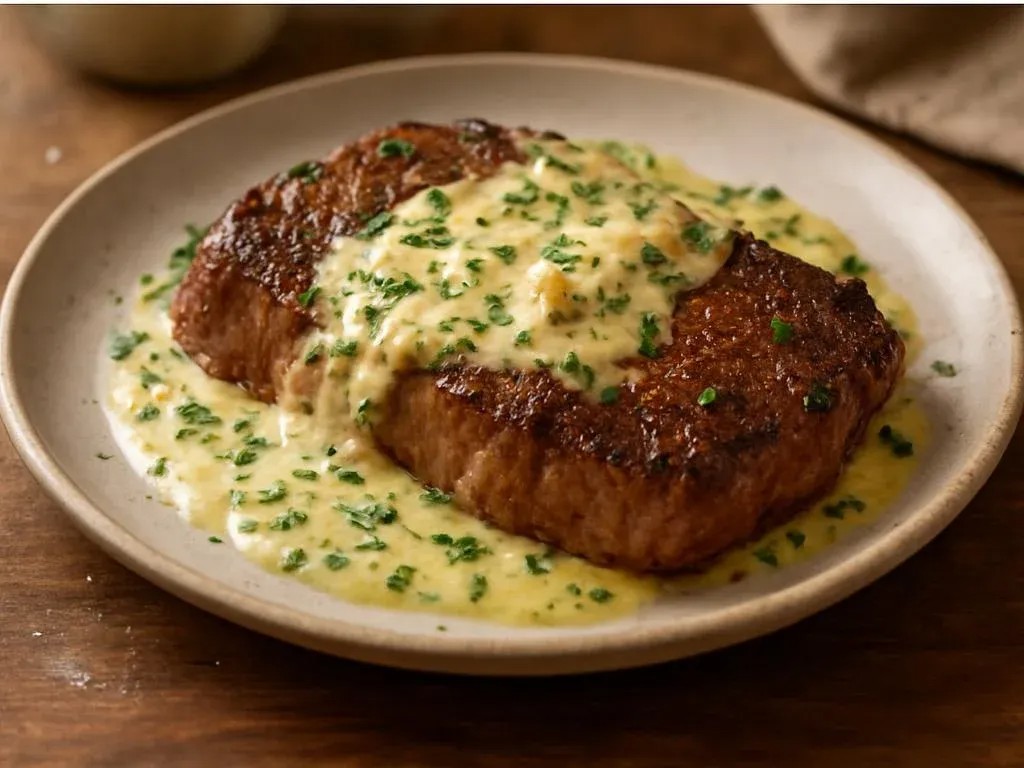
Slice the steaks, plate them, and drizzle the Parmesan cream sauce over the top. Garnish with chopped parsley.
Slicing against the grain ensures tender bites, and plating with sauce lets it cling to each slice. Finish with parsley for brightness and serve immediately while the sauce and steak are warm.
Extra Sections
Choosing the Right Ribeye
Pick steaks with even marbling and a visible fat cap for the richest flavor and juiciness. Well-marbled ribeye tolerates high heat and butter-basting, delivering a tender interior beneath a deeply seared exterior—ideal for a sauce-forward preparation like this.
Nailing the Garlic Butter Baste
Timing the garlic addition is crucial: add garlic after the first flip to avoid burning and achieve gentle infusion. Basting with sizzling butter both crisps edges and deposits savory flavors; spoon it over the steaks for glossy, evenly seasoned crust and aroma.
Managing Sauce Texture
Temperature control and gradual cheese addition prevent grainy sauce. Keep the pan at medium, whisk constantly, and remove from heat as soon as the sauce thickens; if it over-thickens, thin with a splash of cream or warm milk and whisk until smooth.
FAQs
-
Why did my steak stick to the pan?
If the pan wasn’t hot enough or the steak was wet, it will stick. Make sure the skillet is hot, the steaks are patted dry, and give the crust time to form before flipping—when a proper sear forms, the meat will release naturally. -
My sauce split—how can I fix it?
If the sauce has separated, remove from heat and whisk in a small splash of cold cream or a knob of butter off heat to emulsify. Re-warm gently while whisking; avoid high heat to prevent further separation. -
The sauce is too thick—what’s the quickest fix?
Thin with warm cream or a little low-sodium chicken stock, adding a tablespoon at a time until the desired consistency. Whisk vigorously to reincorporate and warm through; never add cold liquid abruptly or the sauce may seize. -
The sauce tastes too salty—any rescue tips?
Balance excess saltiness with acidity or fat: a squeeze of lemon or a teaspoon of Dijon can brighten, while an extra tablespoon of cream or a pat of unsalted butter will mellow saltiness without diluting flavor. -
Can I use a different cut or scale for fewer people?
Yes—sirloin, strip, or filet mignon can substitute, though cooking times vary; thinner cuts need less time. To halve the recipe, use two steaks and reduce sauce ingredients proportionally (divide quantities by two) while keeping technique identical. -
My garlic is burning—what happened?
Garlic burns quickly at high heat. Add it after flipping and when you’ve added the second portion of butter, and stir it into the melted butter; if it browns too fast, reduce heat immediately to prevent bitterness. -
How do I know when steaks are medium-rare without a thermometer?
Use the finger test for doneness: medium-rare feels like the fleshy pad at the base of your thumb when your hand is relaxed. Alternatively, press—slight give with some resistance indicates medium-rare. -
The sauce clumped when I added Parmesan—why and how to avoid?
Pre-grated or cold, dry cheese can clump; add finely grated fresh Parmesan gradually while whisking off-medium heat. If clumps form, strain the sauce and whisk in a splash of warm cream to smooth it.
Conclusion
This Garlic Butter Steak With Parmesan Cream Sauce is an elegant, straightforward dinner that rewards attention to temperature and timing. For more recipe inspiration that uses the same flavor interplay of butter, garlic, and cheese, see this Garlic Butter Steak Bites with Parmesan Cream Sauce, which offers a great small-bite variation.
If you want a slightly different approach to the buttery garlic finish and sauce technique, check out this Creamy Garlic Butter Steak Bites – Cooking For My Soul for additional tips and serving ideas.
Conclusion
Serve this alongside simple roasted vegetables, mashed potatoes, or a crisp salad to balance the richness. With practicing the timing and watching the pan, the recipe becomes reliably delicious—each forkful a mix of seared beef and creamy Parmesan richness.