


Greek Chicken Bowls
Introduction
Bright, wholesome, and easy to personalize, Greek Chicken Bowls bring crisp Mediterranean flavors to a weeknight table. Tender, herby chicken, bright vegetables, tangy tzatziki and a base of quinoa or rice make a satisfying meal that holds up well for leftovers and packed lunches. If you like simple meals with bold flavors and fresh textures, this is a reliable throw-together that always feels special.
For a little visual inspiration while you cook, check out this satisfying chicken GIF to time your sear and rest like a pro.
Ingredients
2 lbs boneless, skinless chicken breasts, 2 tablespoons olive oil, 1 teaspoon garlic powder, 1 teaspoon onion powder, 1 teaspoon dried oregano, Salt and pepper to taste, 2 cups cooked quinoa or rice, 1 cup cherry tomatoes, halved, 1 cucumber, diced, 1 red onion, thinly sliced, 1 cup Kalamata olives, pitted and halved, Feta cheese, crumbled (optional), For the tzatziki sauce: 1 cup Greek yogurt, 1 cucumber, grated and drained, 2 cloves garlic, minced, 1 tablespoon olive oil, 1 tablespoon lemon juice, salt and pepper to taste
- 2 lbs boneless, skinless chicken breasts — The main protein: lean and quick-cooking. Marinating them adds flavor and keeps the meat juicy; if you prefer, slice or butterfly to reduce cooking time.
- 2 tablespoons olive oil — Helps carry the seasonings and prevents sticking during cooking. Olive oil also adds a subtle fruitiness that complements the Mediterranean herbs.
- 1 teaspoon garlic powder — Adds concentrated garlic flavor without the bite of raw garlic. Use alongside fresh garlic in the tzatziki for balance.
- 1 teaspoon onion powder — Rounds out savory flavor in the marinade and gives depth to the chicken without overpowering the herbs.
- 1 teaspoon dried oregano — Classic Greek herb: floral and slightly bitter, it’s the backbone of the marinade and ties the chicken to the bowl’s other components.
- Salt and pepper to taste — Essential for seasoning; salt enhances all flavors, while pepper adds mild heat. Season both the chicken and the tzatziki.
- 2 cups cooked quinoa or rice — The neutral base that soaks up juices and tzatziki. Quinoa adds protein and a nutty note; rice gives a softer, pillowy texture.
- 1 cup cherry tomatoes, halved — Provide sweet acidity and juicy bursts in the bowl that cut through the richness of the chicken and sauce.
- 1 cucumber, diced — Crunchy, cooling and hydrating, the cucumber brightens the bowl and works with the tzatziki for a refreshing profile.
- 1 red onion, thinly sliced — Offers sharpness and color; soaking briefly in cold water can mellow its bite if you prefer.
- 1 cup Kalamata olives, pitted and halved — Salty, fruity, and distinctively Mediterranean, they deliver briny contrast that lifts every bite.
- Feta cheese, crumbled (optional) — Salty and creamy, feta adds tang and a luxurious finish; an optional flourish for richer texture.
- For the tzatziki sauce:
- 1 cup Greek yogurt — Thick and tangy, it forms the base of the tzatziki and cools the spices in the chicken.
- 1 cucumber, grated and drained — Adds texture and cucumber flavor to the sauce; draining prevents the tzatziki from becoming watery.
- 2 cloves garlic, minced — Fresh garlic gives the sauce a punch; adjust to taste depending on how forward you like it.
- 1 tablespoon olive oil — Rounds the sauce and gives a silky mouthfeel; a little fat helps the flavors meld.
- 1 tablespoon lemon juice — Brings bright acidity to balance the yogurt and oil.
- Salt and pepper to taste — Season the tzatziki last so you can balance saltiness after draining the cucumber.
For an extra hint of visual timing while preparing the chicken, you might enjoy this brief cooking GIF that shows color cues during searing and resting.
Directions & Preparation
- Marinate the chicken breasts in olive oil, garlic powder, onion powder, oregano, salt, and pepper for at least 30 minutes.
- Letting the chicken marinate infuses flavor and helps the meat retain moisture during cooking; 30 minutes is a practical minimum, but up to a few hours in the fridge deepens the seasoning. If short on time, even 15 minutes improves the result.
- Grill or bake the chicken until fully cooked, about 25-30 minutes. Let it rest before slicing.
- Cooking until the internal temperature reaches 165°F ensures safety; resting 5–10 minutes lets juices redistribute so slices stay moist. On a grill, aim for a medium-high heat and watch for even color; in the oven, 400°F is a good sweet spot.
- In a bowl, combine cherry tomatoes, cucumber, red onion, and olives to create a fresh salad.
- Tossing the vegetables together lets their flavors mingle and adds a crunchy, acidic element to the bowls. Lightly season with salt and a splash of olive oil or lemon if desired to make the salad sing.
- For the tzatziki sauce, mix the Greek yogurt, drained cucumber, garlic, olive oil, lemon juice, salt, and pepper in a bowl.
- Properly draining the grated cucumber prevents a watery sauce and concentrates the flavor. Taste and adjust lemon, garlic, and salt so the sauce is bright, garlicky, and balanced.
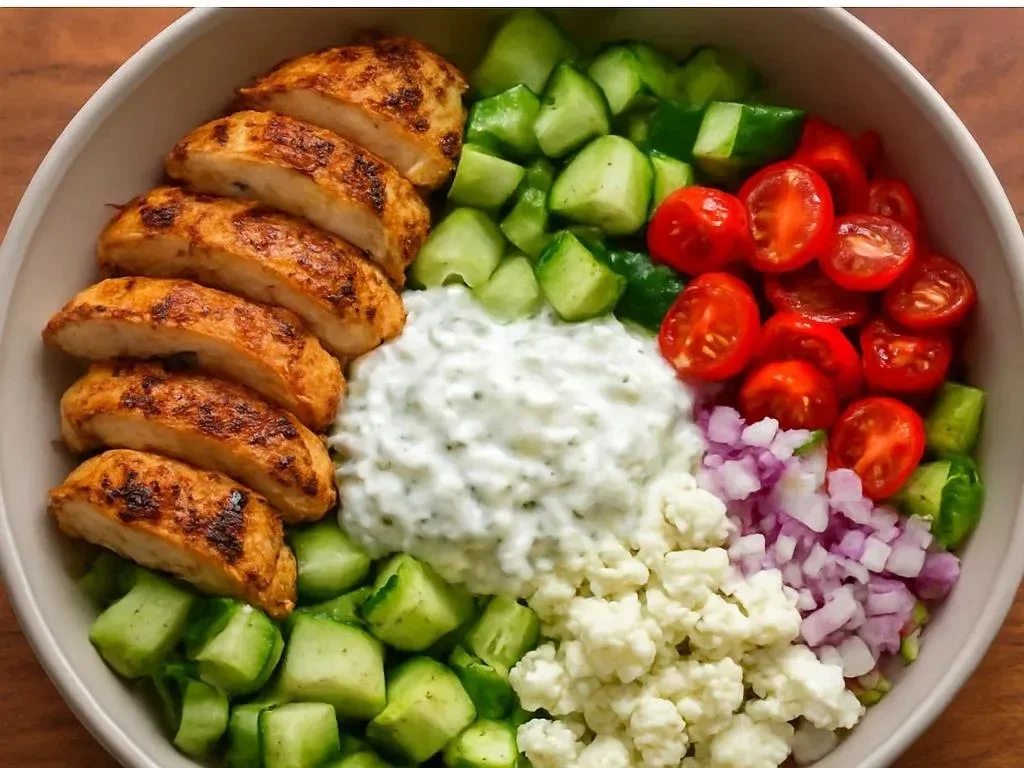
- To assemble the bowls, place a serving of quinoa or rice at the bottom, add sliced chicken, and top with the fresh vegetable mix and tzatziki sauce.
- Building bowls in layers keeps textures distinct and allows each eater to mix as they like. Spoon tzatziki generously where juices can mingle with the grain base for maximum flavor.
- Garnish with crumbled feta cheese if desired. Serve and enjoy!
- Feta provides a salty, creamy finish that complements the briny olives and cool tzatziki. Add herbs like dill or parsley for color, and serve warm or room temperature depending on preference.
Quick marinades and timing tricks
A short, well-balanced marinade is the key to flavorful chicken without an overnight wait. Using oil, dried oregano, and powdered aromatics gets seasoning into the meat fast; just avoid over-salting before you know how long it will rest or if you’ll add salty toppings like olives and feta.
Texture balance for a lively bowl
Contrast is crucial: tender chicken, creamy tzatziki, crisp cucumber and slightly chewy quinoa make each bite interesting. Toasting the quinoa lightly or serving rice that’s fluffy (not sticky) helps maintain textural distinction between components.
Serving scale and presentation
These bowls scale well for families or meal prep; slice the chicken before arranging for faster plating. For a pretty presentation, fan sliced chicken across the grain and pile vegetables in colorful sections — this keeps the bowl visually appealing and easy to eat. And if you need a visual cue for chicken doneness, here’s a helpful quick reference to judge color and rest.
FAQs
Q: My chicken is dry after baking—what went wrong?
A: Likely overcooking or insufficient rest. Reduce oven time slightly, cook to 165°F and remove promptly from heat, then let rest 5–10 minutes before slicing. Thinner breasts need far less time; consider butterflying or pounding to even thickness.
Q: The tzatziki turned out watery. How can I fix it?
A: Drain the grated cucumber more thoroughly—wrap in a clean towel and squeeze excess liquid. If already mixed, chill and spoon off pooled liquid, then stir in a bit more yogurt to thicken and re-season.
Q: Can I substitute chicken thighs for breasts? Any timing changes?
A: Yes—thighs are forgiving and stay juicy; bone-in thighs will take longer (35–45 minutes at 400°F), boneless thighs usually need about 20–25 minutes. Adjust internal temp to 165°F and expect slightly richer flavor.
Q: How can I make the bowl spicier without overwhelming the tzatziki?
A: Add crushed red pepper or a pinch of Aleppo pepper to the chicken marinade, or serve a small spoon of harissa on the side so diners can control heat.
Q: What can I use instead of Kalamata olives if someone dislikes them?
A: Try roasted red peppers for sweet tang, pickled pepperoncini for briny heat, or capers for that burst of saltiness without the olive flavor.
Q: I’m making a larger batch for a party—how should I scale the recipe?
A: Multiply ingredients proportionally; for 3× the servings, triple proteins and bases but taste and scale strong seasonings (garlic, lemon) carefully. Marinate in batches to ensure even coating and cook in shifts to avoid crowding.
Q: The chicken tastes bland even after marinating—what should I check?
A: Ensure you used enough salt in the marinade and that it had contact with the meat. Also confirm the marinade reached all surfaces—massaging it in or using longer marination will help. Finish with a sprinkle of finishing salt after slicing.
Q: How do I keep the bowls from turning soggy for lunchboxes?
A: Pack components separately: base, chicken, salad, and tzatziki in small containers. Assemble just before eating, or layer grains under a lettuce leaf to act as a moisture barrier if packing together.
Conclusion
These Greek Chicken Bowls are a flexible, flavor-forward meal that’s as comfortable for a solo dinner as it is for feeding a crowd. For a slightly different take and additional plating ideas, I often compare versions like the one at Eat With Clarity’s Greek Chicken Bowls to spark variations.
If you’re experimenting with toppings or want a heartier tzatziki-forward version, this rendition from Half Baked Harvest’s Chicken Tzatziki Bowls is a great reference for inspiration. Enjoy building bowls that match your appetite and mood — they’re forgiving, tasty, and endlessly adaptable.