

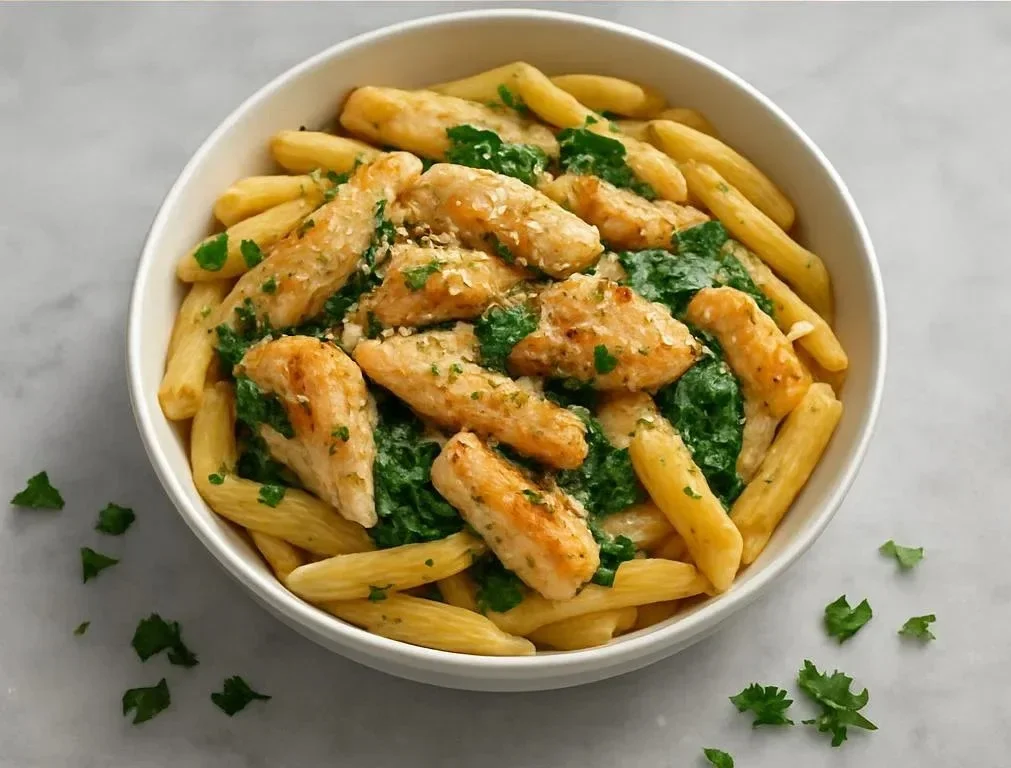
Healthy Garlic Parmesan Chicken Pasta
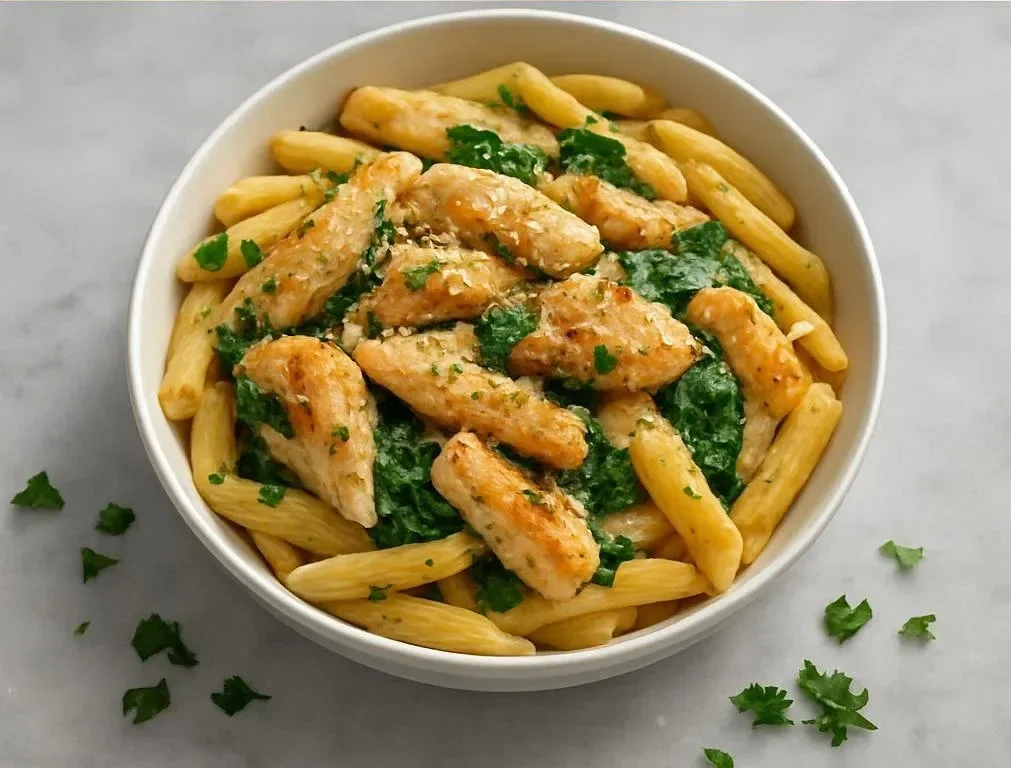
This Healthy Garlic Parmesan Chicken Pasta lightens a classic creamy favorite without skimping on flavor. Tender cubed chicken, a garlicky, cheesy sauce made with Greek yogurt, and whole wheat pasta come together for a comforting weeknight dinner that’s satisfying and nourishing. If you enjoy visual recipe inspiration, see this satisfying chicken GIF that captures the appeal of simple, home-cooked chicken dishes.
The dish balances high-fiber pasta with lean protein and spinach for a rounded plate that travels well from skillet to bowl. It’s approachable for cooks of any level and easy to tweak to preferences—swap a veggie, add heat, or make it dairy-free with thoughtful swaps.
Ingredients
8 oz whole wheat penne or fettuccine, 2 tbsp olive oil, 3 garlic cloves, minced, 1 lb boneless skinless chicken breasts, cubed, 1/2 tsp paprika, 1/2 tsp Italian seasoning, 1 tbsp whole wheat flour, 1 cup low-sodium chicken broth, 1/2 cup low-fat milk (1% or 2%), 1/2 cup plain non-fat Greek yogurt, 1/2 cup freshly grated Parmesan cheese, 2 cups baby spinach (optional but recommended), Salt and black pepper, to taste, Fresh parsley, chopped (for garnish)
- 8 oz whole wheat penne or fettuccine — The whole wheat pasta brings more fiber and a nuttier flavor than white pasta; it holds up well to the sauce so you don’t end up with mushy noodles. Measure by weight for consistent results.
- 2 tbsp olive oil — Used to brown the chicken and gently cook garlic; olive oil adds flavor and helps transfer heat without burning. Opt for extra virgin for aroma, but regular works fine for higher-heat searing.
- 3 garlic cloves, minced — Provides the dish’s aromatic backbone; mince finely so it disperses evenly and doesn’t leave large raw bursts. Sauté briefly to soften and remove raw sharpness.
- 1 lb boneless skinless chicken breasts, cubed — Lean, easy-to-cut protein that cooks quickly in bite-sized pieces; cubes brown faster, creating more flavorful bits in the pan. Pat dry to encourage proper browning.
- 1/2 tsp paprika — Adds mild warmth and color; smoky or sweet paprika both work and complement the garlic without overpowering. Use measured amounts to keep the seasoning balanced.
- 1/2 tsp Italian seasoning — A blend of dried herbs that layers savory notes into the chicken and sauce. It’s a convenient way to add herb complexity without extra chopping.
- 1 tbsp whole wheat flour — A light thickener that helps the sauce cling to pasta while keeping the recipe slightly lighter than heavy cream or roux. Stir with fat to avoid lumps.
- 1 cup low-sodium chicken broth — Provides savory liquid for the sauce and deglazes the pan, lifting browned flavorful bits from cooking the chicken. Low-sodium lets you control final seasoning.
- 1/2 cup low-fat milk (1% or 2%) — Adds body and creaminess without as much fat as whole milk or cream; it smooths with broth to create a silky base for the yogurt and cheese.
- 1/2 cup plain non-fat Greek yogurt — Gives tang, creaminess, and protein while keeping fat down; add off heat or gently warm to prevent curdling. It helps mimic a richer cream sauce.
- 1/2 cup freshly grated Parmesan cheese — Melts into the warm sauce, lending salty umami and depth; freshly grated integrates more smoothly than pre-grated versions.
- 2 cups baby spinach (optional but recommended) — Adds color, nutrients, and a mild vegetal counterpoint that wilts into the sauce without added fuss. Stir in at the end so it keeps some texture.
- Salt and black pepper, to taste — Essential finishing seasonings; add sparingly early and adjust at the end so flavors remain balanced.
- Fresh parsley, chopped (for garnish) — Brightens the finished dish with herbaceous notes and a fresh pop of color; use as a last-minute sprinkle.
Directions & Preparation
-
Cook the Pasta
Cook the whole wheat pasta in a large pot of salted boiling water according to package instructions until al dente. Drain, reserving about 1/2 cup of the pasta cooking water.
This step ensures pasta has bite and won’t fall apart when mixed with sauce. Reserving cooking water adds starchy liquid later if you need to loosen the sauce without thinning flavor. -
Season and Cook the Chicken
Heat 1 tbsp olive oil in a large skillet over medium-high heat. Toss cubed chicken with paprika, Italian seasoning, salt, and pepper, then brown in batches until cooked through and golden (about 3–4 minutes per side). Transfer to a plate.
Browning adds Maillard flavor that deepens the sauce; cooking in batches avoids crowding, which steams rather than sears the meat. Fully cooked, evenly-sized cubes keep texture consistent. -
Build the Garlic Parmesan Sauce
Lower heat to medium, add remaining 1 tbsp olive oil, sauté minced garlic 30–45 seconds until fragrant, then sprinkle in whole wheat flour and stir for 30 seconds. Gradually whisk in chicken broth and milk until smooth and simmer until slightly thickened.
Sautéing garlic just until fragrant prevents bitterness; the flour cooks briefly to remove raw taste and binds liquid. Gradual whisking prevents lumps and allows the sauce to thicken evenly. -
Add Greek Yogurt and Cheese
Remove the pan from direct heat, stir in Greek yogurt until smooth, then add grated Parmesan, stirring to melt. Return to low heat if needed to warm through gently—do not boil.
Adding yogurt off heat prevents curdling and keeps the sauce creamy. Parmesan brings salt and umami; gently warming rather than boiling preserves texture and prevents separation. -
Combine and Finish
Return chicken to the skillet, fold in drained pasta and baby spinach, toss gently; if sauce is too thick, add reserved pasta water a tablespoon at a time to reach desired consistency. Taste and adjust salt and pepper, then sprinkle parsley.
Reincorporating chicken and pasta allows flavors to marry and ensures spinach wilts just enough. The starchy cooking water is a neutral thickener that helps the sauce coat the pasta evenly. -
Serve Hot
Divide into bowls, garnish with extra Parmesan and parsley, and serve immediately.
Serving hot keeps the sauce silky and makes the flavors more pronounced; cooling can thicken the sauce and mute aromatics. Presenting straight from the pan helps retain warmth and texture.
Cook the Pasta
A quick note on whole wheat pasta timing: it often needs a minute or two more than white pasta to reach true al dente. Taste a strand a minute before the package time listed; you want a faint chew so it won’t over-soften when mixed with sauce later.
Season and Cook the Chicken
For even browning, make sure chicken cubes are dry and cut to uniform size. If pieces are sticking, your pan might be too crowded—give them space or increase heat slightly; properly seared chicken contributes savory depth to the final dish.
Build the Garlic Parmesan Sauce
When whisking in liquids, go slowly to avoid lumps and keep heat moderate so dairy ingredients stay stable. If the sauce gets grainy, reduce heat and whisk gently—often a splash of pasta water smooths the texture and brings the sauce together.
FAQs
Q: My sauce tastes a little bland—what can I do?
A: Finish with a small pinch of salt at a time and a squeeze of lemon if available; acid brightens flavors. More freshly grated Parmesan also amps umami without overpowering the dish.
Q: The sauce became grainy after I added Greek yogurt—how do I fix it?
A: Remove from heat immediately and whisk in a tablespoon of warm broth or reserved pasta water to smooth it. Next time add yogurt off heat and warm gently to avoid curdling.
Q: What’s a good non-dairy swap for Greek yogurt?
A: Use unsweetened, thickened plant-based yogurt (soy or coconut-based) combined with a splash of unsweetened almond milk to reach desired creaminess; texture will vary slightly.
Q: Can I reduce the sodium further without losing flavor?
A: Use no-salt-added broth, skip extra added salt while cooking, and rely on lemon zest and fresh herbs to lift the dish; a modest amount of Parmesan still contributes savory depth.
Q: How can I scale this recipe for four people?
A: Double every ingredient and use a larger skillet or two pans to brown chicken without crowding; keep the same technique and adjust cooking times slightly for volume. Stir frequently to ensure even heating.
Q: The chicken came out chewy—what went wrong?
A: Overcooking at too-high heat can toughen lean chicken; aim for golden exterior and internal temperature of 165°F (74°C). Cook in even-sized pieces and remove from pan as soon as cooked through.
Q: I have leftover sauce that seems too thick—what’s the fix?
A: Warm gently and whisk in reserved pasta water, hot broth, or a splash of milk 1 tablespoon at a time until silky. Avoid adding cold liquids directly to hot sauce to prevent seizing.
Q: Can I use frozen spinach instead of baby spinach?
A: Yes—thaw and squeeze out excess water before adding. Add slightly earlier to the pan so any extra moisture evaporates and the wilted texture is pleasant rather than watery.
Conclusion
This Healthy Garlic Parmesan Chicken Pasta is an inviting weeknight option that keeps things light while delivering classic comfort. With a few simple techniques—dry chicken for browning, gentle warming of yogurt, and reserved pasta water at the ready—you’ll get a creamy, well-balanced result every time. For a similar one-pan version and plating inspiration, check out this Garlic Parmesan Chicken and Pasta (One-Pan) post that emphasizes efficiency.
If you’d like a slightly different nutrient profile or flavor twist, this Garlic Parmesan Chicken Pasta – Kinda Healthy Recipes offers variations and serving suggestions to further tailor the dish to your pantry and preferences. Enjoy the process and trust simple adjustments to make it your own.