


Introduction
Pots de crème is a classic French dessert that embodies elegance and indulgence, perfect for impressing guests or treating yourself. The rich, creamy texture paired with the aromatic notes of vanilla bean creates a dessert that is truly heavenly.
With its smooth consistency and delightful flavor, this recipe for decadent vanilla bean pots de crème will become a go-to in your dessert repertoire. The simplicity of the ingredients allows each element to shine, making it a stunning yet attainable treat.
Ingredients
- 2 cups heavy cream
Heavy cream is essential for creating the rich and luxurious texture of pots de crème. Its high-fat content lends a creamy mouthfeel that elevates the dessert, ensuring it is indulgent and satisfying. - 1 cup whole milk
Whole milk complements the heavy cream, adding a slightly lighter texture while still providing richness. It balances the heaviness and helps create a more delicate flavor. - 4 large egg yolks
Egg yolks are crucial for thickening the custard base. They not only add richness but also contribute to the pudding-like consistency that characterizes pots de crème. - 3/4 cup granulated sugar
Sugar serves as the sweetener and enhances the overall flavor of the dessert. It also plays a role in the texture by helping to stabilize the custard as it sets. - 1 vanilla bean
The star of this dish, a vanilla bean, delivers an unparalleled depth of flavor with its aromatic seeds. Using a whole bean offers a more complex flavor profile compared to extract. - Pinch of salt
A pinch of salt enhances the sweetness and balances the flavors, making each spoonful more vibrant and enhancing the overall taste.
Directions & Preparation
Step 1: Preheat the oven to 325°F (160°C).
Preheating the oven is an essential first step to ensure that the pots de crème cook uniformly. An adequately heated oven will create the right environment for the custard to gently set without curdling.
Step 2: Prepare a bain-marie by placing a large baking dish in the oven and filling it with hot water.
A bain-marie is key for even cooking, allowing the custard to bake gently. The water bath prevents the custard from cooking too quickly, maintaining a smooth and creamy texture by regulating the temperature.
Step 3: In a saucepan, combine the heavy cream, whole milk, and the seeds and pod of the vanilla bean. Heat over medium until just simmering.
Heating the cream mixture helps to infuse it with vanilla flavor while bringing it to temperature. Once bubbles form, it’s important to remove it from the heat to avoid boiling, which can affect the final texture.
Step 4: In a bowl, whisk together the egg yolks, sugar, and salt until smooth and pale.
Whisking the egg yolks with sugar and salt helps to incorporate air and create a homogenous mixture. This step is important for achieving a light texture, while the pale color indicates that the sugar is dissolving properly.
Step 5: Slowly pour the warm cream mixture into the egg yolks, whisking constantly to temper the eggs.
Tempering prevents the egg yolks from cooking too quickly and curdling. Pouring in the cream slowly while whisking helps to gradually raise the temperature of the egg mixture, resulting in a smooth custard.
Step 6: Strain the mixture through a fine mesh sieve into a large measuring cup or bowl, discarding any solids.
Straining ensures a silky-smooth custard by removing any curdled egg bits or clumps. This step is vital for the texture of the final product, ensuring it’s creamy and free of lumps.
Step 7: Pour the custard evenly into ramekins and place them in the prepared bain-marie.
Distributing the custard evenly among the ramekins promotes even cooking. The bain-marie will help maintain a uniform temperature throughout the custards, resulting in a flawlessly set dessert.
Step 8: Bake in the oven for 30-35 minutes, or until the edges are set but the center still jiggles slightly.
Baking until the edges set while the centers remain slightly jiggly ensures a custard that is creamy without being overcooked. It's a delicate balance, and checking for the jiggle is key to perfect pots de crème.
Step 9: Remove from the oven and allow to cool at room temperature before refrigerating for at least 2 hours.
Cooling the pots de crème before refrigerating helps them to set properly. The chilling process further develops flavors and enhances the dessert's texture, making for a satisfying end result.
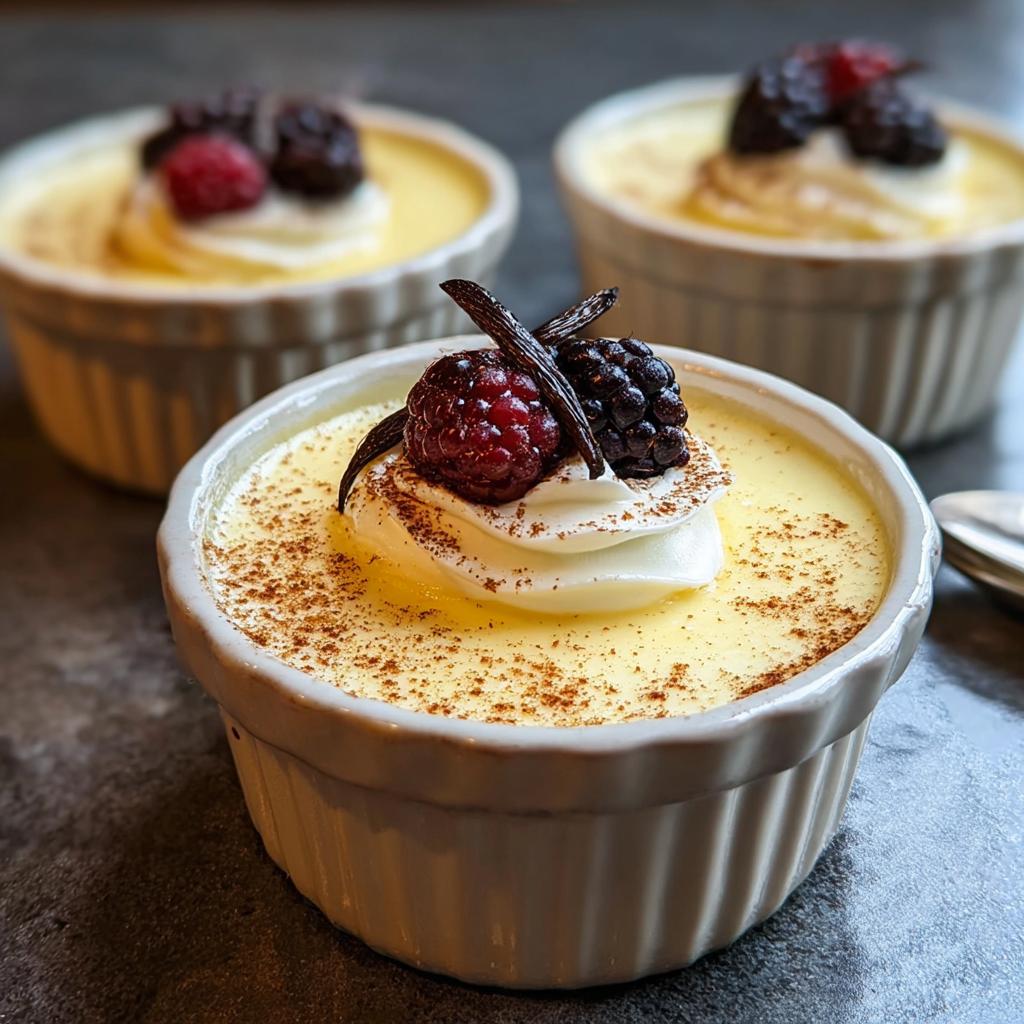
Step 10: Serve chilled, optionally garnished with whipped cream or fresh berries.
Serving the pots de crème chilled highlights their rich, creamy texture. Toppings like whipped cream or berries add texture and a fresh contrast to the deep vanilla flavor, making each bite a delight.
Choosing the Right Vanilla Bean
When selecting a vanilla bean, look for options that are plump and fragrant, with a few visible seeds. Tahitian and Madagascar varieties have unique flavor profiles, bringing different nuances to your pots de crème. While extracts can be used in a pinch, nothing compares to the depth provided by whole beans.
Perfecting the Custard Texture
The success of your pots de crème hinges on achieving the right custard texture. This requires attentive temperature control while cooking and careful tempering of the egg yolks. If the mixture appears too thick while cooking, it’s often a sign of overcooking, leading to a grainy texture, so watch closely during baking.
Serving Suggestions for an Elegant Finish
For a touch of sophistication, consider serving your pots de crème with a dollop of freshly whipped cream and a sprinkle of cocoa powder or a few fresh berries. Edible flowers or a dusting of crushed cookies can also elevate the presentation, turning a humble dessert into a stunning centerpiece.
FAQs
What if my pots de crème are overcooked?
Overcooked pots de crème can develop a grainy texture and curdled appearance. To avoid this, ensure you monitor them closely while baking and remove them from the oven as soon as the edges are set.
Can I substitute the egg yolks with a different ingredient?
While egg yolks are essential for creating a rich custard, you might experiment with aquafaba as a substitute, but results may vary in texture and flavor.
Why does my custard taste bland?
If your pots de crème taste bland, it may be due to insufficient vanilla or sugar. Ensure you're using a good-quality vanilla bean and adjust sugar levels to enhance the overall flavor.
How can I make my pots de crème sweeter?
To increase sweetness, add a little more sugar to the mixture before baking. Taste the custard before pouring into ramekins to ensure it's to your liking.
What if I can’t find vanilla beans?
If fresh vanilla beans are unavailable, using high-quality vanilla extract is a suitable alternative. Use approximately 2 teaspoons of extract in place of one vanilla bean.
What should I do if my custard is too thick?
If your custard turns out too thick, it might be due to overcooking. You can gently whisk in a little warmed cream or milk after chilling to achieve a smoother consistency.
Conclusion
Decadent vanilla bean pots de crème offer a creamy indulgence that is both elegant and deeply satisfying. The delicate flavors meld beautifully, making this dessert a perfect ending to any meal.
With just a handful of quality ingredients and a bit of attention, you can create a dessert worthy of celebration. So gather your ingredients, embrace the process, and enjoy every silky, velvety bite!
Recipe Card
Notes
Additional serving suggestions: pair with a crisp salad, garlic bread, or roasted seasonal vegetables for balance.
For make-ahead, prep components separately and assemble just before heating to preserve texture.
Taste and adjust with acid (lemon/vinegar) and salt right at the end to wake up flavors.