


Introduction
Gumbo is a quintessential dish that beautifully embodies the heart of Creole and Cajun cooking. In this rendition, chicken, shrimp, and sausage come together in a rich, flavorful broth, with a perfect blend of spices and seasonings. Whether it’s served on a chilly evening or at a festive gathering, this gumbo is sure to impress your family and friends.
The key to a great gumbo lies in the roux, which serves as the foundation for the dish, imparting depth and richness. From the comforting aroma of sautéed vegetables to the finishing touches of fresh herbs, each element plays an integral role in crafting this comforting stew. Get ready to dive into a bowl of deliciousness, packed with the vibrant flavors of the South.
Ingredients
- 1/2 cup vegetable oil
Used to make the roux, this oil helps develop the brown color and nutty flavor that is essential for a traditional gumbo. - 1/2 cup all-purpose flour
This flour combines with the oil to create the roux; the longer it cooks, the deeper the flavor of the gumbo. - 1 large onion, chopped
Onions form the aromatic base of the gumbo, contributing sweetness and depth to the flavor profile. - 1 green bell pepper, chopped
Adding texture and a slightly sweet flavor, the bell pepper enriches the mirepoix, enhancing the overall taste. - 2 celery stalks, chopped
Celery adds a fresh crunch and balances the richness of the meat and roux. - 3 cloves garlic, minced
Garlic brings a pungent, savory note, elevating the complexity of the gumbo. - 1 pound chicken thighs, cut into bite-sized pieces
Juicy and tender thighs offer rich flavor and hold up well during cooking, making them ideal for gumbo. - 1 pound smoked sausage, sliced
The sausage introduces a smoky flavor and adds another layer of richness to the dish. - 1 pound shrimp, peeled and deveined
Shrimp contribute a sweet seafood note that pairs beautifully with the spices and proteins in the gumbo. - 6 cups chicken broth
This liquid base not only adds flavor but also allows the roux and spices to permeate throughout the gumbo. - 2 cups okra, sliced
Okra acts as a natural thickener while providing a unique texture, quintessential in many Southern recipes. - 2 cups diced tomatoes with juices
Tomatoes bring acidity and brightness, balancing the richness of the meat and roux. - 2 tablespoons Cajun seasoning
This mixture of spices adds heat and flavor depth, characteristic of authentic gumbo. - Salt and pepper, to taste
Essential for enhancing flavors, adjusting the seasoning can make or break the dish. - 2 bay leaves
These leaves add aromatic flavor during cooking, infusing the broth with a unique herbaceous note. - 2 tablespoons chopped fresh parsley
Fresh parsley adds a burst of color and freshness at the end, brightening the overall dish. - Cooked rice, for serving
Rice serves as the perfect accompaniment, soaking up the rich flavors of the gumbo.
Directions & Preparation
Step 1: Make the roux by combining vegetable oil and flour in a large pot.
Start with a heavy-bottomed pot over medium heat; the sturdy base prevents scorching. Whisk the flour and oil together until smooth, then continue to cook, stirring constantly. The roux should turn a rich, deep brown, nearly the color of chocolate. This step is crucial, as the roux not only thickens the gumbo but also imparts a nutty, complex flavor.
Step 2: Add the chopped onion, green bell pepper, and celery to the roux.
Known as the ‘Holy Trinity’ in Cajun cooking, these vegetables form the aromatic base of the gumbo. Cook until they’re soft and translucent, about 5-7 minutes. It’s vital to take your time here; allowing the vegetables to soften enhances their sweetness and enriches the overall gumbo.
Step 3: Stir in the minced garlic and cook for another minute.
Garlic’s sharp aroma enhances the dish and releases its oils, which combine with the vegetables. Cook just until fragrant; burned garlic can introduce an unpleasant bitterness, undermining the careful balance of flavors you’re building.
Step 4: Add the chicken pieces and sausage to the pot, stirring to combine.
Browning the chicken and sausage in this step develops additional layers of flavor, creating a savory base for the gumbo. Sear them until just cooked through; they will finish cooking as the gumbo simmers, allowing their flavors to infuse the broth.
Step 5: Pour in the chicken broth and bring the mixture to a boil.
The broth is essential for creating the stew-like consistency of gumbo. Once boiling, reduce the heat to low to allow the gumbo to gently simmer. This gentle heat helps meld the flavors and ensures that the proteins finish cooking evenly without becoming tough.
Step 6: Add okra, diced tomatoes, Cajun seasoning, bay leaves, salt, and pepper.
Incorporating these ingredients introduces vibrant flavors and aroma. Okra will thicken your gumbo naturally, while the tomatoes provide acidity. Adjust seasoning carefully here; you’ll have a chance to taste and modify later.
Step 7: Cover and simmer for at least 45 minutes, stirring occasionally.
Simmering allows the flavors to deepen and marry. Stirring periodically prevents sticking and ensures all components cook evenly. You’ll know it’s ready when the chicken is tender and the broth is fragrant.
Step 8: Add the shrimp and cook for an additional 5-7 minutes.
Shrimp cook quickly, and adding them towards the end preserves their tender texture. Look for them to turn pink and opaque; overcooking will make them tough. This is also a great time to taste the gumbo and adjust seasoning as needed.
Step 9: Remove bay leaves and stir in chopped parsley before serving.
Removing the bay leaves is important, as they are not meant to be eaten. Stirring in parsley adds a fresh, vibrant note that balances the rich flavors. Serving hot over cooked rice allows for the full appreciation of the dish’s depth.
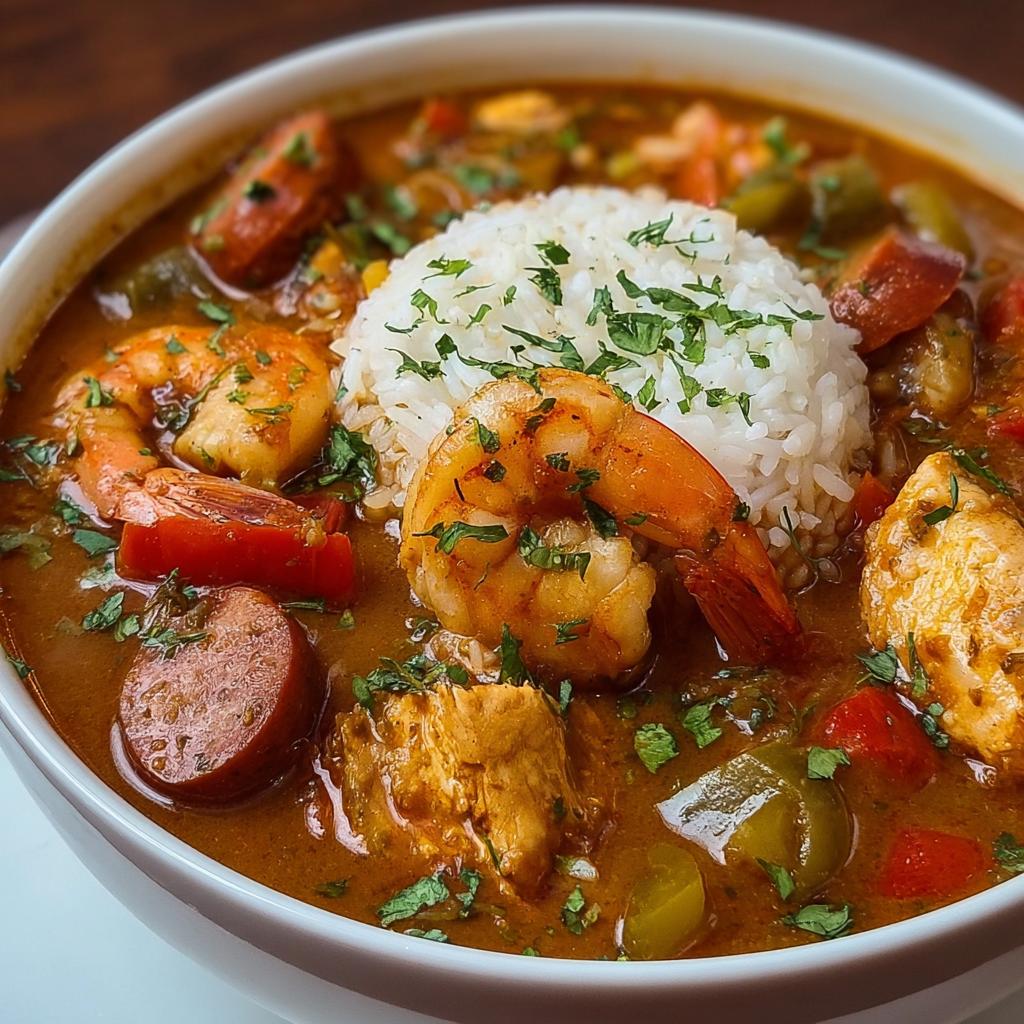
Creating the Perfect Roux: The Heart of Gumbo
Mastering the roux is essential for crafting an authentic gumbo. This mixture of flour and fat, cooked until deeply browned, offers a rich flavor that permeates the entire dish. Slow and steady is the key; rushing this process may result in a burnt taste. A well-made roux should look and smell like dark chocolate, providing a robust foundation that enhances the overall taste.
Layering Flavors: The Importance of Aromatics
The use of onion, bell pepper, and celery—known as the Holy Trinity—forms the aromatic backbone of gumbo. Each component contributes its unique flavor, creating a harmony that is further enhanced by garlic. Allowing these vegetables to sweat and soften in the roux is critical for achieving a well-rounded and flavorful profile. Their natural sweetness balances the richness of the meats, resulting in a complex and satisfying dish.
Serving Suggestions: Perfecting the Dish
Gumbo is best served hot over a generous scoop of cooked rice, which acts as the perfect canvas for soaking up all the glorious flavors. Garnish with additional parsley or green onions for a burst of color and freshness. Pair your gumbo with crusty bread or cornbread to round out the meal. As a tradition, it can also be complemented by a splash of hot sauce for those who enjoy a little extra heat.
FAQs
Why did my gumbo turn out too thick?
If your gumbo is too thick, you can easily thin it out by adding a bit more chicken broth or water until you reach your desired consistency.
What can I do if my gumbo tastes bland?
If your gumbo lacks flavor, try adding more Cajun seasoning, salt, and pepper. You can also incorporate a splash of hot sauce or Worcestershire sauce for added depth.
Can I use different types of sausage?
Yes, feel free to experiment with different sausages such as andouille, chorizo, or even turkey sausage for a lighter version.
How can I prevent the shrimp from becoming overcooked?
Add the shrimp towards the end of the cooking process, ensuring they cook just long enough to turn pink and opaque without becoming rubbery.
What should I do if I overcooked the chicken?
If the chicken is overcooked, it may be dry. To help, shred it into smaller pieces and mix it back into the gumbo to retain moisture from the broth.
Is there a vegetarian version of this recipe?
You can definitely create a vegetarian gumbo by substituting the chicken and sausage with mushrooms and additional vegetables, plus vegetable broth instead of chicken broth.
Conclusion
Chicken shrimp sausage gumbo is a comforting dish that brings a taste of Louisiana to your dining table. By honing in on each ingredient and allowing the flavors to meld beautifully, you ensure a meal that is full of tradition and delight.
This recipe celebrates the essence of gumbo, encouraging you to explore unique variations while enjoying the process. Whether it’s a cozy night in or a gathering with friends, this dish is sure to warm the heart and please the palate.
Recipe Card
Notes
Additional serving suggestions: pair with a crisp salad, garlic bread, or roasted seasonal vegetables for balance.
For make-ahead, prep components separately and assemble just before heating to preserve texture.
Taste and adjust with acid (lemon/vinegar) and salt right at the end to wake up flavors.